2-Axis vs. 3-Axis Drone Gimbals: What the Engineering Actually Means for Your Footage
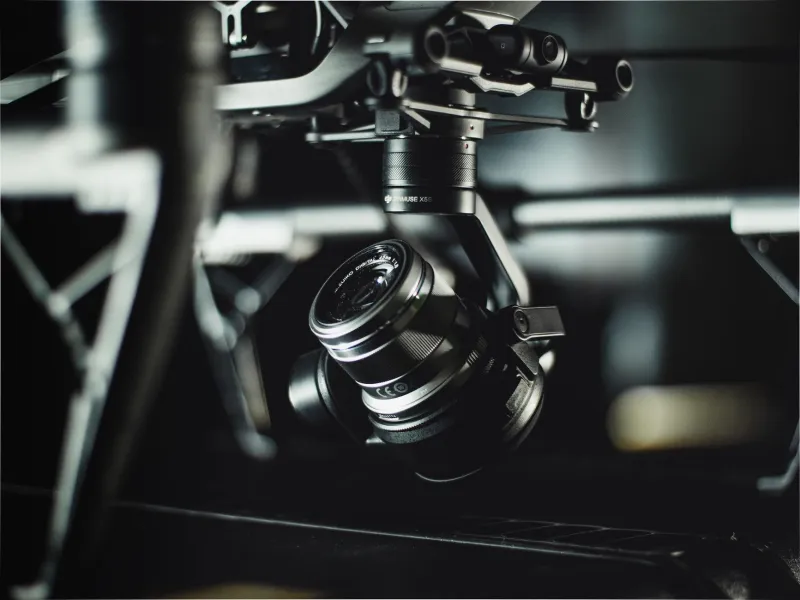
When shopping for a professional-grade drone, the camera payload often receives more scrutiny than the airframe itself—and rightfully so. Among the most consequential specifications you will encounter is the gimbal axis count. Manufacturers routinely advertise "3-axis stabilization" as a premium differentiator, but many buyers remain unclear on what that distinction actually delivers in practice. This guide examines the mechanical architecture, software role, and real-world performance trade-offs between 2-axis and 3-axis gimbal systems across a range of use cases common to US-based professionals.
The Mechanical Foundation: What Each Axis Controls
A gimbal is, at its core, a motorized suspension system designed to isolate a camera from the motion of the platform carrying it. Each axis of rotation corresponds to a specific plane of movement:
- Roll refers to the side-to-side tilting of the aircraft, like a ship rocking on waves.
- Pitch governs the forward-and-back tilt, relevant whenever a drone climbs, descends, or brakes.
- Yaw controls the left-right rotation around a vertical axis—essentially the same motion as the drone spinning in place.
A 2-axis gimbal compensates for roll and pitch only. This configuration handles the most visually disruptive movements reasonably well and is mechanically simpler, which translates to lower manufacturing cost and reduced weight. However, any yaw disturbance—wind gusts, aggressive directional changes, or vibration transmitted through the airframe—passes directly into the footage uncorrected.
A 3-axis gimbal adds dedicated yaw stabilization, closing that gap. The result is a system capable of maintaining a locked horizon and consistent heading even when the aircraft is pushed laterally by crosswinds or executing tight orbital flight paths around a subject.
Software's Role in Stabilization Performance
Hardware alone does not tell the full story. Modern gimbal systems rely heavily on inertial measurement units (IMUs) and onboard processors to anticipate and counteract motion before it translates to camera shake. The firmware governing motor response speed, correction thresholds, and sensor fusion algorithms varies considerably across manufacturers and price tiers.
Entry-level drones with 3-axis gimbals sometimes underperform mid-range competitors because their IMU quality or processing speed cannot keep pace with rapid, multi-directional disturbances. Conversely, well-tuned 2-axis systems from established manufacturers—paired with in-camera electronic image stabilization (EIS)—can produce footage that rivals lower-end 3-axis hardware under controlled conditions.
That said, EIS is a software-based workaround rather than a true mechanical solution. It functions by cropping the sensor frame and digitally compensating for motion, which inherently reduces effective resolution. For professionals delivering 4K or higher footage to clients, relying on EIS as a substitute for a third mechanical axis introduces a meaningful quality compromise.
Real-World Performance Across Professional Use Cases
Real Estate Aerial Photography
For real estate videographers operating over suburban neighborhoods or commercial properties, 2-axis stabilization is often sufficient—provided wind conditions remain moderate and flight paths are planned conservatively. Slow, deliberate reveal shots and steady lateral tracking moves rarely stress the yaw axis. Professionals in this segment frequently cite the DJI Mini 4 Pro as a capable 3-axis option at a price point that does not require commercial-scale budgets, while operators willing to accept some post-production stabilization work have found success with 2-axis platforms at lower acquisition costs.
Cinematic and Film Production
Narrative filmmakers and commercial production crews represent the segment where 3-axis stabilization justifies its premium most unambiguously. Dynamic camera movements—arc shots, rapid subject tracking, descent into tight spaces—demand yaw correction that 2-axis hardware simply cannot provide. At this tier, platforms such as the DJI Inspire 3 or Autel Robotics EVO II Pro, both featuring 3-axis gimbals with high-grade IMUs, are industry standards for a reason. The difference between a clean orbital shot and one with subtle rotational drift is immediately apparent on a broadcast monitor, and clients in this space will notice.
Infrastructure and Aerial Inspection
Utility companies, construction firms, and infrastructure inspectors operating drones for close-range asset documentation have a distinct set of priorities. Hovering in close proximity to structures—power lines, bridge undersides, cell towers—exposes the aircraft to turbulent air pockets and requires frequent, precise repositioning. In these scenarios, 3-axis stabilization provides the platform stability necessary to capture sharp, usable imagery without repeated passes. Additionally, many inspection workflows involve thermal or multispectral payloads with their own stabilization requirements, making gimbal compatibility and payload capacity critical evaluation criteria alongside axis count.
Price-to-Performance Benchmarks
Understanding where axis count intersects with budget helps frame purchasing decisions more concretely:
- Under $500: Most consumer drones in this range offer 2-axis mechanical stabilization supplemented by EIS. Acceptable for hobbyist documentation, limited for professional delivery.
- $500–$1,500: This bracket is where credible 3-axis systems become accessible. The DJI Mini 4 Pro and Skydio 2+ represent different engineering philosophies at comparable price points, with the former prioritizing gimbal quality and the latter emphasizing autonomous obstacle avoidance.
- $1,500–$5,000: Professional prosumer and enterprise-lite platforms dominate here. Expect robust 3-axis gimbals, interchangeable lens support on select models, and significantly improved IMU specifications.
- $5,000 and above: Enterprise platforms designed for broadcast, inspection, and mapping workflows. Gimbal systems at this tier are often modular, allowing operators to swap payloads based on mission requirements.
Key Specifications to Evaluate Beyond Axis Count
When comparing gimbal systems, the following specifications provide meaningful insight beyond the marketing headline:
- Angular vibration range: Measured in degrees, this indicates how much rotational disturbance the gimbal can absorb. Lower values indicate tighter stabilization.
- Stabilization accuracy: Expressed in ±degrees, this reflects how precisely the gimbal maintains its target orientation.
- Maximum controllable rotation speed: Relevant for operators who need responsive camera movement during active shooting rather than purely locked shots.
- Payload capacity: Critical for operators considering third-party cameras or sensor attachments.
The Verdict for Serious Buyers
The choice between 2-axis and 3-axis stabilization is not purely a question of budget—it is a question of application fit. For low-complexity aerial photography in calm conditions, a well-engineered 2-axis system with quality EIS may be entirely adequate. For professionals delivering footage to paying clients across dynamic shooting scenarios, the mechanical and software advantages of 3-axis stabilization represent a justifiable investment rather than a discretionary upgrade.
Before committing to a platform, define your primary use case, evaluate the specific IMU and firmware quality of candidate models rather than relying solely on axis count, and where possible, review sample footage captured under conditions representative of your actual workflow. Specifications inform the decision; real-world output validates it.