Why Your 4K Mirrorless Overheats and a Cinema Camera Does Not: The Thermal Engineering Gap Manufacturers Conceal
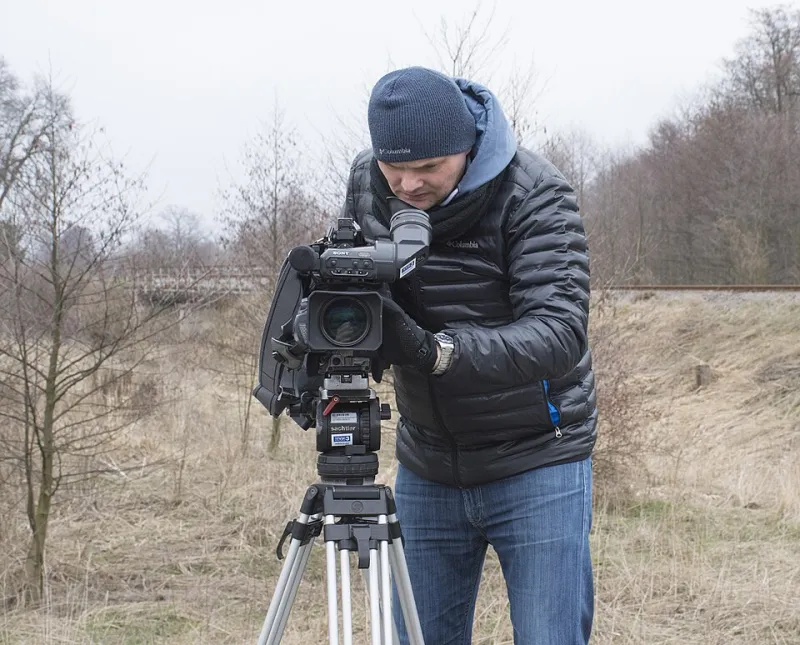
Photo: Jacek Halicki, CC BY-SA 4.0, via Wikimedia Commons
The marketing narrative around modern mirrorless cameras is compelling. A $2,000 body offers the same sensor format, the same advertised resolution, and frequently the same maximum frame rate as cameras costing ten times as much. For photographers and hybrid shooters, that value proposition is often legitimate. For videographers who need continuous recording through a full production day, it conceals a fundamental engineering limitation that no spec sheet will voluntarily disclose: thermal capacity.
This article examines the specific engineering decisions that determine how long a camera can sustain its rated performance before thermal throttling intervenes, why those decisions cost money to implement correctly, and what questions serious buyers should be asking before committing to a camera body for professional video work.
Heat Is the Hidden Variable in Video Performance
Image sensors generate heat as a direct consequence of their operation. The faster they read out pixel data—which is precisely what higher frame rates and higher resolutions demand—the more power they consume and the more heat they produce. This is not a design flaw; it is a physical property of semiconductor operation.
The difference between a consumer mirrorless camera and a professional cinema camera is not, at the sensor level, primarily about image quality. Modern consumer sensors are genuinely excellent. The difference is in what happens to the heat those sensors generate over an extended recording session.
A mirrorless camera body is designed around a set of competing priorities: compactness, weight, battery life, and affordability. Thermal management competes directly with all four of those priorities. A larger heat sink adds weight and volume. Active cooling—fans or heat pipes—adds cost, complexity, and potential noise contamination for audio recording. Vapor chamber cooling, used in some high-end designs, adds significant manufacturing expense. Every dollar and gram spent on heat dissipation is a dollar and gram not spent on something the marketing team can put on the box.
Cinema cameras operate under a different priority hierarchy. The body can be larger, heavier, and more expensive because the buyer's primary concern is sustained performance under professional production conditions. Thermal management is not a compromise—it is a core specification.
The Substrate and Packaging Difference
Beyond the heat dissipation structures around the sensor, the sensor itself is constructed differently in cameras designed for sustained video recording. Consumer sensors are typically packaged in configurations optimized for cost and miniaturization. The thermal pathway from the sensor die to the surrounding structure is limited by the packaging design.
Back-illuminated stacked sensors—used in higher-end mirrorless and cinema cameras—place the processing layer behind the photodiode layer, which improves read speed but also concentrates heat generation in a smaller physical area. Managing that heat concentration requires deliberate engineering. In budget implementations, the thermal pathway from the sensor stack to any dissipation structure is narrow, and heat accumulates quickly under sustained load.
Professional cinema cameras address this through direct thermal bonding between the sensor package and a dedicated heat spreader, which then connects to either a passive radiator with sufficient surface area or an active cooling system. The materials involved—copper alloys, thermal interface compounds with high conductivity ratings—add cost but dramatically extend the thermal ceiling before throttling begins.
What Thermal Throttling Actually Does to Your Footage
The term "overheat warning" suggests a binary outcome: the camera either works or it stops. The reality is more insidious. Most mirrorless cameras implement a graduated thermal response that begins degrading performance well before the camera displays a warning or halts recording.
The first stage of thermal response in many consumer mirrorless bodies is a reduction in processing headroom. The camera continues recording but allocates less processing capacity to noise reduction, color science computation, and autofocus tracking. The image quality degradation at this stage is subtle—slightly elevated noise in shadow areas, marginally less accurate color rendering—but it is measurable in post-production.
The second stage involves a reduction in sustained write speed, which can introduce compression artifacts in codec-dependent recording modes. Cameras recording in All-Intra codecs at high bit rates are particularly vulnerable here, as the buffer cannot compensate for reduced write throughput the way it can in Long-GOP recording modes.
The third stage is the hard stop—the recording halt that every mirrorless user has encountered at an inconvenient moment. By this point, footage quality has already been compromised for several minutes.
Active vs. Passive Cooling: What the Engineering Actually Costs
Passive cooling—heat sinks, thermal mass, and convective airflow through chassis venting—is the most common approach in mirrorless cameras because it adds no moving parts, no noise, and minimal cost. Its limitation is that it depends on ambient temperature and airflow conditions. In a warm studio, on a gimbal with restricted airflow, or under direct sunlight, passive cooling efficiency drops precisely when recording demands are highest.
Active cooling, implemented through small internal fans or Peltier-effect cooling elements, is rare in mirrorless bodies but present in several professional-tier options. The Nikon Z9 and Sony FX3 represent different approaches to this problem—the FX3 uses a fanless but heavily heat-sinked design with a chassis built to dissipate heat through its body, while dedicated cinema cameras from ARRI and RED incorporate active thermal management as a core engineering feature.
The cost differential between these approaches is not trivial. A properly engineered active cooling system with vibration isolation to prevent audio contamination, sufficient airflow to maintain sensor temperatures under sustained 4K 60p recording, and a sealed design to prevent dust ingestion adds hundreds of dollars to manufacturing cost at minimum.
What Buyers Should Evaluate Before Purchasing
Spec sheets do not disclose thermal ceilings. Manufacturers are not required to publish the ambient temperature at which their cameras begin throttling, the duration of continuous recording before a warning appears, or the recovery time after an overheat event. This information must be sourced from independent testing.
Before purchasing a camera body for professional video work, buyers should seek out continuous recording duration tests conducted at room temperature—68 to 72 degrees Fahrenheit—and at elevated ambient temperatures representative of outdoor summer shooting conditions in their region. The difference between a camera's performance in a climate-controlled review environment and its performance on a July afternoon in Phoenix or Miami can be substantial.
Additionally, buyers should evaluate whether the camera's thermal management is adequate for their specific use case rather than its maximum rated specification. A camera that overheats during 4K 60p recording may perform without issue at 4K 24p. Understanding the thermal ceiling at your actual working frame rate and resolution is more useful than knowing the maximum specification the camera can theoretically sustain for thirty seconds in a cold room.