USB-C 240W Cable Claims Under the Microscope: What Manufacturers Don't Want You to Test
Walk into any electronics retailer or scroll through a major online marketplace, and you will find dozens of USB-C cables labeled "240W" at price points ranging from $8 to $85. The assumption baked into that wattage figure is that all cables meeting it are functionally equivalent. That assumption is wrong, and acting on it can cost you far more than the price difference between a budget cable and a properly engineered one.
The USB Power Delivery 3.1 specification, which formally introduced the 240W Extended Power Range (EPR) tier, created a technical ceiling that the broader cable manufacturing market has been quietly exploiting ever since. Understanding why requires looking past the label and into the engineering—or lack thereof—inside the cable itself.
The E-Marker Chip: The Component That Actually Governs Power Delivery
Every USB-C cable rated above 60W is required by the USB-IF specification to contain an embedded e-marker chip—a small integrated circuit that communicates the cable's rated current, voltage tolerance, and data speed capabilities to connected devices. When a laptop and a charger negotiate a high-wattage power delivery contract, they rely on the e-marker to confirm the cable can safely carry that load.
The problem is that e-marker chips are not uniformly manufactured or verified. A legitimate e-marker from a reputable supplier accurately reports the cable's physical capabilities. A counterfeit or low-grade chip may report 5A/48V capability regardless of what the copper conductors inside the cable can actually sustain. The connected devices trust that report and proceed with a power delivery contract the cable cannot safely honor.
This is not a theoretical edge case. Third-party testing labs, including those operated by independent reviewers using USB power delivery analyzers like the ChargerLAB POWER-Z or the Fnirsi FNB58, have documented cables in wide retail circulation that advertise 240W ratings while containing e-marker chips that either misreport capabilities or fail to comply with USB-IF EPR marker requirements entirely.
Copper Gauge: The Physical Constraint No Label Acknowledges
Even a fully compliant e-marker chip cannot compensate for inadequate conductor cross-section. At 240W—which under the EPR standard is delivered at 48V/5A—the current through the cable's power conductors is substantial. Copper has a finite resistance per unit length, and that resistance generates heat proportional to the square of the current flowing through it.
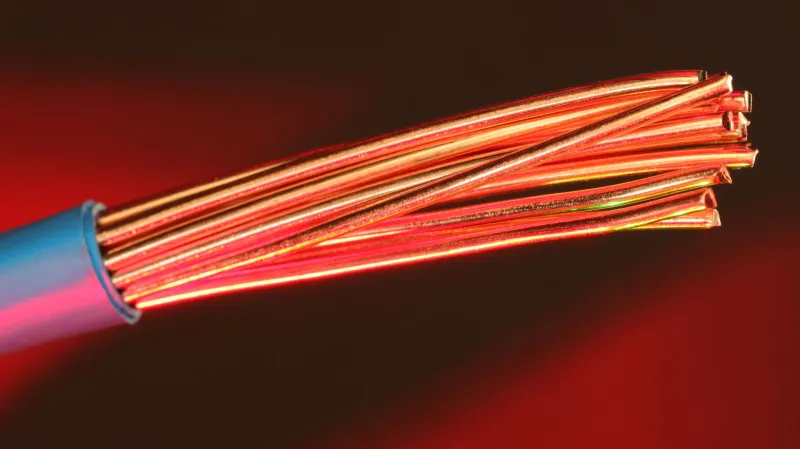
A properly specified 240W EPR cable requires copper conductors in the power lines sized appropriately to keep resistive losses and thermal output within safe limits across the cable's full length. Budget cable manufacturers routinely use thinner gauge wire that meets appearance expectations while failing thermal performance requirements under sustained high-wattage loads.
The consequences are not always dramatic. A cable carrying 240W through undersized conductors may not immediately fail. Instead, it heats gradually, degrades insulation, and over repeated charge cycles introduces resistance that causes the connected charger to renegotiate downward to a lower wattage tier—or, in less conservative charging implementations, continues attempting to deliver rated power through a conductor that is quietly approaching its thermal limit.
USB-IF Certification: Meaningful, But Not Mandatory
The USB Implementers Forum operates a formal certification program for USB-C cables and charging equipment. A cable bearing the USB-IF certified mark has been submitted for third-party testing and verified against the published specification. That distinction matters enormously.
However, USB-IF certification is voluntary. Manufacturers are not legally compelled to submit products for testing before printing wattage ratings on packaging. A cable can be sold in the United States with a "240W" claim having undergone no independent verification whatsoever. The FTC has not historically treated USB-C wattage claims as a regulated performance specification in the way that, for example, automotive fuel economy figures are governed.
This creates a market environment where the certification mark is the single most reliable indicator of a cable's legitimacy—and yet most cables sold at retail do not carry it.
How to Evaluate a Cable Before Damage Occurs
For buyers unwilling to take cable packaging at face value, a structured evaluation approach is available without requiring laboratory equipment.
Check for USB-IF certification first. The USB-IF maintains a publicly searchable database of certified products at usb.org. A cable's model number or the manufacturer's product line can be cross-referenced before purchase. If the cable does not appear in that database, treat its wattage claim as unverified.
Examine physical construction. Legitimate high-wattage cables are noticeably heavier and less flexible than standard cables of the same length. A 240W EPR cable with appropriate conductor gauge will have a measurable physical heft that cheap alternatives lack. If a cable claiming 240W feels identical in hand to a standard 60W cable, that is a meaningful warning sign.
Use a USB power delivery analyzer. Devices like the POWER-Z KM003C or the AVHzY CT-3 connect inline between a charger and a device and display the negotiated voltage, current, and wattage in real time. They also read the e-marker chip's reported capabilities. A cable advertising 240W EPR should report as an EPR-capable cable in the analyzer's e-marker readout. If it reports as a standard 60W or 100W cable, the e-marker is either absent, non-compliant, or fraudulent.
Monitor temperature under sustained load. For cables already in use, an inexpensive infrared thermometer pointed at the cable midpoint during a sustained high-wattage charge session provides a crude but useful safety check. A properly engineered 240W cable should remain close to ambient temperature. Significant warmth under load indicates resistive losses that signal undersized conductors.
The Brands Worth Trusting and Why
Anker, Cable Matters, and Belkin maintain USB-IF certified product lines that include EPR-rated cables with verifiable compliance documentation. These are not the only legitimate options, but they represent manufacturers with established quality control processes and the institutional accountability that comes with operating named brands in the US market.
Generic cables sold under rotating marketplace storefronts—a common pattern on Amazon and Walmart's third-party marketplace—carry no equivalent accountability. A storefront that disappears after negative reviews accumulate cannot be held responsible for equipment damaged by a fraudulent cable.
The Cost Calculus
A properly certified 240W USB-C cable costs between $20 and $40 from reputable suppliers. The laptops, tablets, and professional equipment those cables charge routinely cost between $800 and $3,000. The risk calculus of saving $15 on a cable against the potential for accelerated battery degradation, charging circuit damage, or in extreme cases thermal events involving lithium cells does not favor the budget option.
The 240W specification represents a genuine engineering achievement in USB-C power delivery. The cables that actually meet it are well-designed, thoroughly tested, and priced accordingly. The ones that merely claim to meet it are a liability wearing a specification as a marketing costume.