When Your Headphones Are Only Half the Story: A Serious Buyer's Guide to DACs and Audio Fidelity
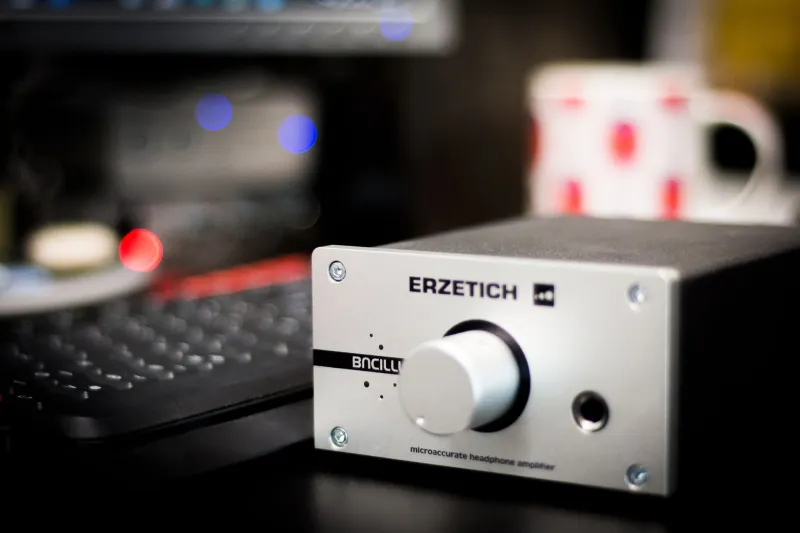
There is a persistent misconception in the personal audio market: that a premium pair of headphones is sufficient to unlock high-fidelity sound. In practice, the headphones represent only one half of a signal chain. The device responsible for converting digital audio data into the analog waveform your headphones actually reproduce — the digital-to-analog converter, or DAC — determines the ceiling of what those headphones can deliver. Without adequate DAC hardware, even a $500 pair of open-back planar magnetics will underperform against its rated specifications.
This guide is intended for buyers who have already committed to quality headphones, or who are planning to do so, and need an objective framework for evaluating whether their existing audio source hardware is limiting their listening experience.
What a DAC Actually Does — and Why Implementation Matters
Every digital audio file — whether a lossless FLAC track, a high-resolution TIDAL stream, or a standard MP3 — is a sequence of binary data. A DAC interprets that data and reconstructs it as a continuous analog voltage signal. That signal is then amplified and sent to the headphone drivers.
The quality of this conversion process is governed by several measurable parameters:
- Signal-to-Noise Ratio (SNR): Expressed in decibels, SNR measures the level of the desired audio signal relative to background noise introduced by the hardware. A higher SNR — typically above 110 dB for quality DACs — indicates a cleaner output.
- Total Harmonic Distortion + Noise (THD+N): This figure represents unwanted harmonic frequencies and noise added during conversion. High-performance DACs achieve THD+N figures below 0.001%.
- Dynamic Range: The span between the quietest and loudest reproducible signals. Audiophile-grade DACs commonly achieve dynamic range figures exceeding 120 dB.
- Bit Depth and Sample Rate Support: Higher bit depth (24-bit vs. 16-bit) increases dynamic range capacity. Higher sample rates (96 kHz, 192 kHz) support broader frequency reproduction, though the audible benefit of rates above 44.1 kHz remains a subject of legitimate technical debate.
Integrated Audio: What Your Laptop or Smartphone Is Actually Using
Modern smartphones and laptops incorporate DAC circuitry directly onto their main processing chips or motherboards. These integrated solutions are engineered to meet broad consumer expectations — voice calls, streaming video, casual music playback — rather than audiophile-grade fidelity.
Integrated mobile DAC chips, such as those found in flagship Android devices and Apple's A-series processors, have improved significantly over the past several years. Measured SNR figures for premium smartphones now frequently reach 100–105 dB, which is technically respectable. However, integrated designs face structural limitations:
Electrical interference. In a smartphone or laptop, the DAC operates in close proximity to radio frequency components, processors, and display drivers — all of which generate electromagnetic interference. Shielding in consumer devices is rarely sufficient to fully isolate the audio circuit.
Output impedance mismatches. Many integrated headphone outputs carry output impedance values of 1–3 ohms, which may not pair optimally with low-impedance or multi-driver in-ear monitors.
Power delivery constraints. Driving high-impedance headphones — such as the Sennheiser HD 600 (300 ohms) or Beyerdynamic DT 990 Pro (250 ohms) — requires more current than integrated amplifier stages are designed to supply. The result is audible compression at higher volumes and a loss of low-end authority.
Dedicated DAC Units: Where the Engineering Diverges
A standalone DAC — whether a desktop unit, a portable USB-powered device, or a desktop DAC/amplifier combination — isolates the conversion and amplification stages from the noise floor of consumer electronics. The engineering advantages are measurable.
Entry-level dedicated DACs in the $100–$200 range, such as those using ESS Sabre or AKM Velvet Sound chipsets, routinely measure at SNR figures above 115 dB and THD+N below 0.001%. These figures represent a genuine, instrument-verified improvement over integrated solutions — not marketing language.
At the $300–$700 tier, units from manufacturers such as Schiit Audio (based in Newhall, California), iFi Audio, and Topping begin incorporating discrete component stages, improved output impedance management, and support for DSD and MQA decoding. These devices are designed to serve as long-term infrastructure investments rather than accessories.
Above $700, diminishing returns become relevant. Improvements in this range are often audible only with resolving headphones above $600 and in controlled listening environments. For the majority of US buyers operating in typical home or office settings, the $150–$400 range represents the most defensible value proposition.
Portable DACs: The Mobile Listening Case
For buyers who primarily listen on the go — commuting, traveling, or working in shared spaces — portable DAC/amplifier dongles offer a practical middle path. Devices such as the iFi GO bar, the Chord Mojo 2, and the Hidizs S9 Pro connect via USB-C and provide measurably superior performance compared to integrated smartphone output, while remaining pocketable.
These units are particularly relevant for users pairing premium in-ear monitors with a smartphone, where the output impedance and noise floor of the integrated chip may audibly affect the IEM's frequency response. Measured output impedance on quality dongles typically falls below 1 ohm — a meaningful specification for multi-driver balanced armature IEMs.
Decision Framework: When to Invest and When to Hold
The following criteria should guide a buyer's evaluation:
Invest in a standalone DAC if:
- Your headphones have an impedance above 100 ohms and you are using a laptop or smartphone as the primary source.
- You are experiencing audible hiss, channel imbalance, or distortion at moderate volumes.
- Your headphones retail above $300 and you are streaming lossless audio through services such as Apple Music Lossless or Amazon Music HD.
- You work in audio production, podcasting, or content creation where output accuracy has professional implications.
An integrated solution may suffice if:
- Your headphones are low-impedance (below 50 ohms) and high-sensitivity consumer or lifestyle models.
- Your primary listening context is background music, podcasts, or video content rather than critical listening.
- You are using a modern flagship smartphone (2022 or later) with a USB-C output and low-impedance IEMs.
- Your total headphone investment is below $150.
Measurements vs. Listening: Resolving the Debate
A recurring tension in the audio community concerns the relationship between objective measurements and subjective listening impressions. The position taken here is straightforward: measurements establish a floor. A DAC that measures poorly will rarely sound excellent. However, two DACs with nearly identical measured performance may present subtle differences in character that are detectable under controlled listening conditions with high-resolution source material.
For the serious buyer, the appropriate approach is to prioritize measured performance first — using resources such as Audio Science Review's published benchmarks — and then, where budget allows, conduct in-person or trial-period evaluations. Many US-based retailers, including Crutchfield and Moon Audio, offer return windows that make comparative listening feasible without financial risk.
Final Assessment
The DAC is not an audiophile luxury reserved for enthusiasts with dedicated listening rooms. It is a functional component of any serious headphone setup, and its absence from a buyer's consideration is a technical oversight with audible consequences. The investment required to move from integrated audio to a quality standalone DAC — often $150 to $250 for a desktop unit — is modest relative to the cost of the headphones it will serve. For buyers who have already committed to premium transducers, addressing the source hardware is the most efficient remaining step toward realizing the full capability of that investment.