The Switch Revolution: How Third-Party Mechanical Keyboard Switches Are Outperforming Cherry MX in 2024
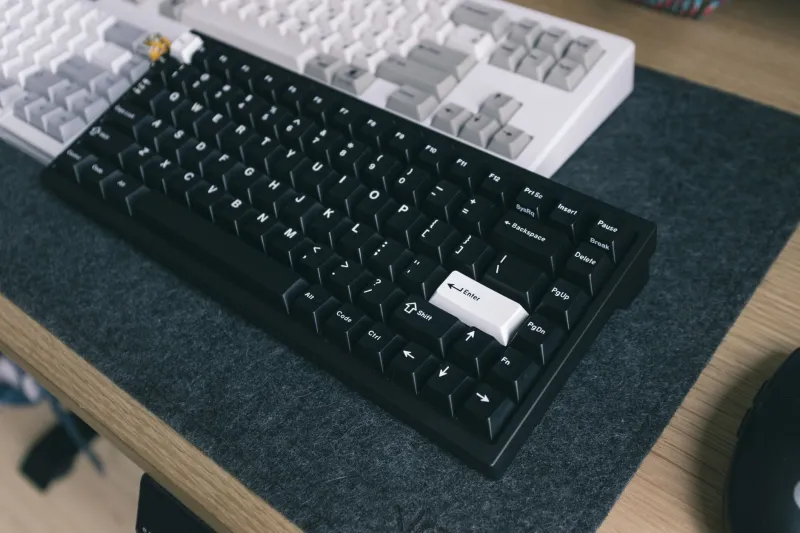
For decades, Cherry MX switches were the de facto standard against which every mechanical keyboard was judged. Retailers advertised "Cherry MX Red" or "Cherry MX Blue" as quality signals, and consumers accepted those designations as shorthand for reliability. That era is not over, but it is changing in ways that serious tech buyers should understand before making their next keyboard investment.
A new class of switch manufacturers — primarily headquartered in China but selling aggressively into the US market — has closed the engineering gap with Cherry and, in several measurable categories, surpassed it. The implications for buyers range from significant cost savings to meaningfully improved typing and gaming performance.
Understanding the Core Specifications Before Comparing Brands
Before evaluating any switch, three specifications govern practical performance: actuation force, pre-travel distance, and total travel distance.
Actuation force is measured in centinewtons (cN) or grams-force (gf) and defines how much downward pressure is required to register a keypress. Lower values (35–45 gf) favor rapid gaming inputs; higher values (55–80 gf) reduce accidental keystrokes during extended typing sessions.
Pre-travel distance refers to how far a key descends before actuating. Cherry MX Red switches actuate at 2.0 mm, which has become a widely referenced benchmark. Shorter pre-travel values are generally preferred by competitive gamers; longer values provide more tactile feedback before commitment.
Total travel distance is the full keystroke depth, typically 4.0 mm in most standard switches. Some manufacturers have introduced shorter total travel designs — as low as 3.5 mm — to accelerate key reset times.
With those benchmarks established, the comparison across manufacturers becomes far more instructive.
Gateron: The Switch That Forced the Industry to Reconsider Cherry
Gateron is the name most frequently cited when US keyboard enthusiasts discuss Cherry alternatives, and the technical justification is straightforward. Gateron's linear switches — particularly the Gateron Yellow and Gateron G Pro 2.0 series — feature a smoother stem-to-housing tolerance than standard Cherry MX linears, a difference that is immediately perceptible when typing or gaming.
The Gateron Yellow actuates at 35 gf with a 2.0 mm pre-travel and 4.0 mm total travel, making it one of the lightest widely available switches on the market. For competitive gaming applications where keystroke speed is prioritized, this specification profile is genuinely compelling. Street pricing for Gateron switches typically runs 30–50 percent below equivalent Cherry MX units when purchased in bulk quantities, a difference that becomes significant when outfitting a full 104-key board.
Gateron's KS-3 and Milky Yellow variants have also earned strong reputations in the enthusiast community for their factory lubrication quality, which reduces the need for aftermarket lubing — a time-intensive modification common among serious keyboard builders.
Kailh: Engineered Differentiation, Not Just Price Competition
Kailh (manufactured by Kaihua Electronics) has pursued a different competitive strategy. Rather than undercutting Cherry on price alone, Kailh has introduced proprietary switch architectures that address specific use-case limitations Cherry MX has not resolved.
The Kailh Box switch series redesigned the contact mechanism entirely, using a box-shaped stem that improves resistance to dust, moisture, and lateral wobble. For professionals working in environments where keyboard cleanliness is a practical concern — workshop settings, field stations, or shared office environments — the Box switch architecture provides measurable durability advantages. IP-rated keyboards using Kailh Box internals have become a recognized product category, a space Cherry has not fully entered.
Kailh's Speed switch lineup reduced pre-travel to 1.1–1.4 mm across linear and tactile variants, a specification specifically engineered for gaming applications where actuation latency matters. The Speed Copper variant introduces a short tactile bump at 1.1 mm pre-travel, a design that has no direct Cherry MX equivalent.
For buyers evaluating keyboards priced between $80 and $150 — a segment heavily populated in the US retail market — Kailh switches appear in a significant percentage of well-reviewed boards from brands including Drop, Glorious, and Ducky.
Akko and the Boutique Switch Market
Beyond Gateron and Kailh, a secondary tier of manufacturers has emerged targeting enthusiast buyers willing to invest in premium switch experiences at prices still below Cherry MX. Akko's CS switch series and their collaboration switches — including the widely discussed Akko Cream Yellow and Jelly switches — have developed genuine followings in US keyboard communities on platforms such as Reddit's r/MechanicalKeyboards and Geekhack.
Akko CS Jelly Pink switches, for example, offer a 45 gf actuation force, 2.0 mm pre-travel, and a notably smooth linear action attributed to their POM (polyoxymethylene) stem material. POM has lower friction coefficients than the nylon stems found in many Cherry MX linears, translating to a perceivably smoother keystroke without factory lubrication.
This materials engineering distinction is meaningful for serious buyers: it represents a design choice with a documented performance rationale, not merely a marketing claim.
Where Cherry MX Still Holds Legitimate Advantages
A neutral assessment requires acknowledging where Cherry MX retains genuine strengths. Cherry's manufacturing consistency across decades of production has produced an extensive third-party ecosystem — keycap compatibility, switch testers, and PCB socket designs — that was built around Cherry specifications. The MX footprint remains the most universally supported standard in the industry.
Cherry MX switches also carry a proven longevity rating of 100 million actuations, a figure that has been independently verified across multiple professional reviews. While Gateron and Kailh publish similar or higher ratings, the real-world validation depth for Cherry remains greater simply due to time in market.
For enterprise procurement environments where long-term vendor stability and documented reliability records are procurement criteria, Cherry MX remains a defensible specification choice.
Practical Recommendations by Use Case
For competitive gaming: Gateron Yellow or Kailh Speed Silver. Both deliver sub-45 gf actuation with minimal pre-travel, optimized for rapid multi-keystroke inputs. Budget-conscious buyers will find Gateron Yellow-equipped boards at strong value across major US retailers.
For professional typing and extended use: Kailh Box Brown or Akko CS Jelly switches in tactile variants. The tactile feedback aids touch-typing accuracy without the acoustic intrusion of clicky switches in shared office environments.
For durability in demanding environments: Kailh Box switch variants with IP-rated housing. The sealed stem design provides meaningful protection that standard Cherry MX and Gateron designs do not offer.
For switch customization and enthusiast builds: Akko or Gateron G Pro 2.0 series, both of which perform well with minimal aftermarket modification and accept standard MX-compatible keycaps.
The Bottom Line for Serious Buyers
The mechanical keyboard switch market in 2024 is no longer a story of Cherry MX and its imitations. It is a mature, competitive engineering landscape in which multiple manufacturers offer distinct technical advantages depending on the use case. Buyers who default to Cherry MX without evaluating alternatives are leaving measurable performance and value on the table.
SP2 Device recommends approaching switch selection as a specification-first decision. Define your actuation force preference, your pre-travel tolerance, and your environmental requirements before evaluating brand names. When evaluated on those terms, the alternatives discussed here earn their place in any serious buyer's consideration set.