Beyond the Watt Rating: What Serious Buyers Must Know Before Trusting USB-C Power Delivery With Professional Equipment
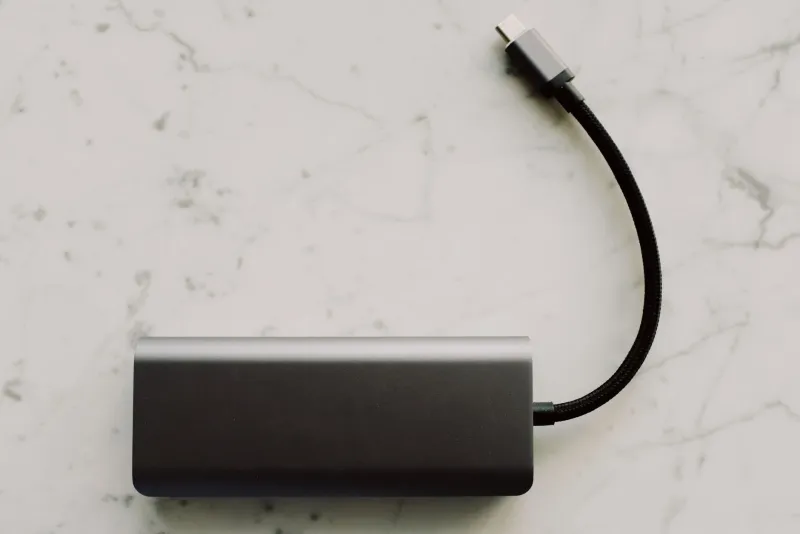
The USB-C connector has become the default power interface for an enormous range of professional electronics, from compact compute modules and external GPUs to broadcast-grade LED lighting controllers and portable diagnostic workstations. This consolidation is largely a convenience story—one cable, one port, universal compatibility. But that narrative obscures a more complicated engineering reality. USB-C Power Delivery is not a single standard. It is a layered specification with meaningful differences between implementations, and those differences carry real consequences when the equipment drawing current is worth thousands of dollars.
This guide is written for buyers who have moved past the laptop-charger use case and are evaluating USB-C PD solutions for professional or industrial applications. The goal is to identify which specifications actually predict real-world reliability and which figures exist primarily to win shelf space.
Understanding the PD Specification Landscape
The USB Power Delivery specification, maintained by the USB Implementers Forum (USB-IF), has gone through several major revisions. The current governing document is USB PD 3.1, which extends the maximum power ceiling to 240 watts through what the spec calls Extended Power Range (EPR). Prior versions topped out at 100 watts under Standard Power Range (SPR).
The distinction matters immediately for professional buyers. A 100-watt ceiling is sufficient for charging a high-performance laptop or powering a compact NUC-style compute module, but it falls short for applications like powering a mobile video production workstation with an active display, running a portable X-ray fluorescence analyzer, or sustaining a professional-grade LED panel array in the field. If your equipment demands more than 100 watts continuously, you are in EPR territory—and that narrows the field of compliant hardware considerably.
Critically, EPR operation requires that both the source (charger) and the sink (device) negotiate EPR capability explicitly. A charger advertising 240-watt output will default to 100 watts or less when connected to a non-EPR device. This is intentional and safe, but it means buyers cannot assume that a high-wattage charger will deliver high wattage to every device it touches.
Voltage Negotiation: The Mechanism Behind the Wattage
Power Delivery operates through a structured handshake between source and sink. The source advertises a set of Power Data Objects (PDOs)—essentially a menu of available voltage and current combinations. The sink reviews this menu and requests what it needs. Common voltage steps under SPR include 5V, 9V, 15V, and 20V. EPR adds a 28V, 36V, and 48V tier.
For professional buyers, the relevant question is not simply what maximum voltage a charger can supply, but how cleanly it transitions between voltage levels and how accurately it holds a requested voltage under load. Voltage deviation during negotiation or under transient load conditions is a documented failure mode that can stress or damage sensitive power input circuitry in professional equipment. High-quality industrial USB-C chargers specify voltage regulation tolerances—typically ±5% or tighter—and buyers should treat this figure as a screening criterion.
Another consideration is the Programmable Power Supply (PPS) profile, an optional extension to the PD spec that allows finer-grained voltage and current adjustment in small increments. PPS is increasingly common in fast-charging scenarios for mobile devices, but it also has utility in professional applications where precise input voltage matching reduces thermal stress on downstream regulators.
Cable Specifications Are Not Optional Reading
A charger rated for 240 watts is only as useful as the cable connecting it to the device. USB-C cables carry an embedded controller chip—the E-Marker—that communicates the cable's rated capabilities to the source and sink during negotiation. A cable without a valid E-Marker, or with an E-Marker that misrepresents its ratings, will cause the system to fall back to lower power modes or fail entirely.
For EPR applications, the cable must be rated for 48V and at least 5A (240W). For SPR applications above 60 watts, a 5A-rated cable with a valid E-Marker is required. The 3A default assumed by the spec for uncertified cables caps usable power at 60 watts regardless of what the charger and device are both capable of delivering.
In field environments, cable durability compounds the certification question. Industrial-grade USB-C cables from manufacturers such as Tripp Lite, Monoprice (Pro series), and Plugable specify bend radius ratings, jacket materials, and connector retention force—specifications that generic consumer cables omit entirely. For equipment deployed in mobile production, construction site monitoring, or outdoor diagnostic work, these mechanical specifications are directly relevant to long-term reliability.
Certification Tiers and What They Verify
USB-IF certification is the baseline verification that a device has been tested against the published specification. Certified products appear in the USB-IF Integrators List and carry the certified logo. This certification is meaningful but limited—it confirms interoperability and basic safety compliance, not long-term reliability under demanding duty cycles.
For applications where continuous high-power operation is the norm rather than the exception, buyers should look beyond USB-IF certification to safety certifications from UL, ETL, or TÜV, which evaluate thermal performance, overcurrent protection, and component derating under sustained load. Industrial chargers from companies like Mean Well and Delta Electronics are routinely tested to these standards and publish detailed derating curves that describe how output capacity changes with ambient temperature—information that is essentially absent from consumer-oriented products.
Comparing Enterprise and Industrial USB-C PD Solutions
The following matrix summarizes representative options across three price tiers for buyers sourcing USB-C PD solutions for professional use:
| Tier | Representative Products | Max Output | EPR Support | PPS | Key Differentiator |
|---|---|---|---|---|---|
| Entry Professional ($40–$80) | Anker 747, Ugreen Nexode 100W | 100W SPR | No | Yes (some) | Compact form factor, travel-friendly |
| Mid Professional ($80–$180) | Plugable 240W GaN, Baseus GaN Pro 240W | 240W EPR | Yes | Yes | EPR compliance, multi-port configurations |
| Industrial / Enterprise ($180+) | Mean Well GST280A series (with USB-C adapter), Delta Electronics ADP-240 | 240W+ | Varies | Varies | UL/TÜV certification, derating documentation, extended MTBF ratings |
Note that the industrial tier often involves solutions not marketed directly as USB-C chargers—they are power supply platforms adapted to the PD interface. Buyers in this tier are typically working with systems integrators rather than retail channels.
Practical Scenarios Where Specifications Determine Outcomes
Professional LED Lighting in the Field: Portable LED panels from manufacturers like Nanlite and Godox increasingly accept USB-C input at 100W or higher. Running multiple panels from a single EPR hub requires a source capable of sustaining EPR output across multiple ports simultaneously—a specification that many multi-port chargers explicitly do not guarantee.
External Compute Modules: Devices like the NVIDIA Jetson series and Intel NUC Compute Elements draw sustained power during inference or rendering workloads. Voltage sag under load—a consequence of underspecified cable or charger impedance—can cause system instability that presents as software errors rather than obvious power failures, complicating diagnosis.
Mobile Diagnostic Workstations: Field service environments in aerospace, utilities, and industrial maintenance increasingly rely on ruggedized tablets or compact workstations powered via USB-C. In these contexts, the cost of a power failure or corrupted data session far exceeds the price difference between a certified industrial charger and a consumer alternative.
The Specification Checklist for Serious Buyers
Before committing to any USB-C PD solution for professional use, verify the following:
- Wattage class: SPR (≤100W) or EPR (up to 240W), matched to your device's actual requirement
- Voltage regulation tolerance: ±5% or tighter under rated load
- PPS support: Relevant if downstream equipment benefits from fine-grained voltage control
- Cable E-Marker rating: Verified 5A rating for any application above 60W
- Safety certifications: UL, ETL, or TÜV for sustained-load industrial applications
- Thermal derating documentation: Available from manufacturer for high-ambient-temperature deployments
- USB-IF certification: Baseline requirement, not a sufficient condition on its own
The USB-C interface has genuine merit as a unified power delivery solution for professional electronics. But that merit is only realized when every component in the power chain—charger, cable, and receiving device—is specified, certified, and matched to the actual load. For buyers whose equipment budgets run into the tens of thousands, the incremental cost of a properly specified power delivery solution is not a premium. It is risk management.