IPS, VA, or TN: The Panel Decision That Determines Everything Your Monitor Actually Delivers
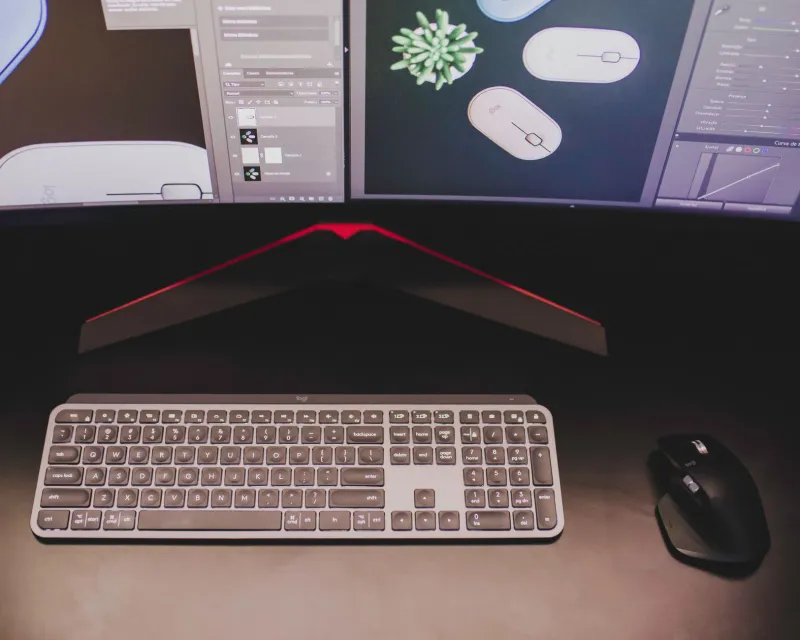
Walk into any electronics retailer or scroll through any major US online storefront, and monitor marketing will assault you with refresh rate numbers. 144Hz. 240Hz. 360Hz. The implication is clear: higher is better, and the number defines the product. That framing, however, is commercially convenient rather than technically honest. The panel technology underlying those refresh rates — IPS, VA, or TN — determines the fundamental character of every image a monitor produces, and no refresh rate figure compensates for choosing the wrong panel type for your application.
This guide examines the engineering realities of each technology so that serious buyers can make decisions grounded in specification truth rather than marketing emphasis.
The Foundational Engineering: How Each Panel Controls Light
All three panel types are liquid crystal display variants, meaning they manipulate liquid crystal orientation to control backlight transmission through color filters. The critical difference lies in how each technology aligns those crystals and how that alignment affects performance.
Twisted Nematic (TN) panels use a relatively simple helical crystal structure that unwinds under electrical voltage. This mechanical simplicity translates to extremely fast crystal response times — the primary reason TN panels dominated early gaming monitor development. The trade-off is aggressive color shift at off-axis viewing angles and a compressed color gamut that typically reaches only 72 percent of the NTSC color space in standard configurations.
In-Plane Switching (IPS) panels rotate crystals parallel to the glass substrate rather than perpendicular to it. This lateral movement produces dramatically more consistent color across wide viewing angles and supports broader color gamut coverage, frequently achieving 95 to 99 percent of the DCI-P3 color space in professional-grade implementations. The historical limitation was slower pixel response, though modern IPS variants have closed that gap considerably.
Vertical Alignment (VA) panels orient crystals perpendicular to the substrate in their resting state, blocking backlight more completely than either alternative. This produces the superior contrast ratios that VA technology is known for — commonly 3,000:1 to 6,000:1 compared to the 1,000:1 typical of IPS panels — while maintaining better color accuracy than TN at moderate viewing angles.
Why a 75Hz IPS Monitor Can Outperform a 240Hz TN Display
This statement requires precision to be useful: it applies specifically to content creation, photo editing, video production, and any workflow where color accuracy and tonal consistency are professional requirements.
A TN panel operating at 240Hz still renders color through a fundamentally limited gamut and shifts hue noticeably when a viewer moves their head or works across a large screen surface. For a video editor color-grading footage intended for streaming platforms calibrated to DCI-P3, a TN panel introduces systematic inaccuracy that no refresh rate compensates for. The editor is making decisions based on distorted information.
An IPS panel at 75Hz delivers accurate, consistent color across the entire display surface. For non-gaming workflows, 75Hz is entirely sufficient — human perception of motion smoothness plateaus well below 240Hz in standard desktop and video playback contexts. The IPS panel in this comparison is simply doing its intended job correctly, while the TN panel is doing its job quickly but inaccurately.
This is not an argument against high refresh rates. It is an argument that refresh rate is only meaningful within an appropriate panel context.
The Ghosting Reality Serious Gamers Must Understand
Ghosting — the visible trailing artifact that follows fast-moving objects on screen — is determined by pixel response time, which is the speed at which a pixel transitions between luminance states. This is where TN panels have historically held their advantage, with gray-to-gray response times reaching 1ms in optimal conditions.
However, the ghosting conversation is more nuanced than specifications suggest. VA panels have a well-documented weakness: slow pixel response in dark-to-dark transitions. When a dark pixel must shift to a slightly different dark value, VA crystals move sluggishly, producing a characteristic smearing artifact that is particularly visible in dark game environments — night scenes, space settings, shadowed interiors. For competitive players operating in these visual contexts, VA ghosting is a genuine performance liability regardless of the panel's contrast advantages.
Modern IPS panels, particularly those marketed under manufacturer-specific designations such as Nano IPS, Fast IPS, or similar branding, now achieve pixel response times that approach TN performance at high refresh rates. Current high-end IPS gaming monitors at 240Hz and 360Hz deliver motion clarity that was functionally unavailable outside TN panels just five years ago. The gap has narrowed substantially, and for most gaming applications below the highest competitive tiers, a fast IPS panel represents the best available compromise between motion performance and image quality.
TN panels retain a meaningful advantage only at the absolute ceiling of competitive play, where every fraction of a millisecond is scrutinized and color accuracy is irrelevant to the task.
Contrast Ratio and the VA Advantage in Specific Environments
VA technology occupies a genuinely useful middle position that its reputation does not always reflect. The contrast ratio advantage is not a minor specification difference — a 6,000:1 contrast ratio produces blacks that appear visually distinct from the gray-blacks of a 1,000:1 IPS panel, and this difference is immediately perceptible in real-world use.
For users who consume significant amounts of film and television content, particularly in dimmer viewing environments, a VA panel with strong contrast performance delivers a cinematic image quality that IPS panels cannot replicate without local dimming technology. Home theater PC setups, media center configurations, and mixed-use monitors for buyers who split time between productivity and entertainment represent legitimate VA use cases.
The caveat remains the dark-scene ghosting limitation. Buyers who intend to game seriously in dark-environment titles should weigh this trade-off carefully before committing to VA.
Making the Correct Panel Decision for Your Application
The structured decision framework for panel selection should begin with primary use case, not refresh rate budget.
If your work involves color-critical output — photography, video production, graphic design, or any professional visual discipline — IPS is the appropriate technology. Prioritize color gamut coverage, factory calibration quality, and Delta-E accuracy ratings over refresh rate specifications. A well-calibrated IPS panel at 60Hz or 75Hz serves these workflows more honestly than any TN alternative at any refresh rate.
If competitive gaming is your primary application and you operate at the highest tiers of play where input latency and motion clarity are paramount, TN remains viable at very high refresh rates, though fast IPS panels are increasingly competitive. Accept the color and viewing angle limitations as the cost of that specific performance profile.
If your use is genuinely mixed — productivity work, casual gaming, and media consumption in relatively equal measure — a fast IPS panel at 144Hz or higher represents the most defensible all-purpose choice available in the current market. It sacrifices the absolute motion performance ceiling and the contrast depth of its alternatives while delivering the broadest competence across all use cases.
VA panels are best selected deliberately for their contrast strength in specific environments, with clear awareness of their ghosting limitations in gaming contexts.
The Specification That Should Lead Your Research
Refresh rate is a legitimate specification. It is not, however, the specification that defines what a monitor fundamentally is. Panel technology establishes the perceptual foundation on which every other display characteristic rests. Buyers who understand this hierarchy will consistently make more accurate purchase decisions — and will be less likely to find that a high-refresh-rate monitor fails to perform as expected in their actual working or gaming environment.
At SP2 Device, our consistent recommendation is to identify your panel type first, then evaluate refresh rate, resolution, and feature sets within that correctly filtered category. The monitors that disappoint serious buyers are rarely the ones with insufficient refresh rates. They are almost always the ones chosen for the wrong panel technology.