The Polling Rate Threshold: When Nanoseconds Actually Matter and When You're Paying for Marketing
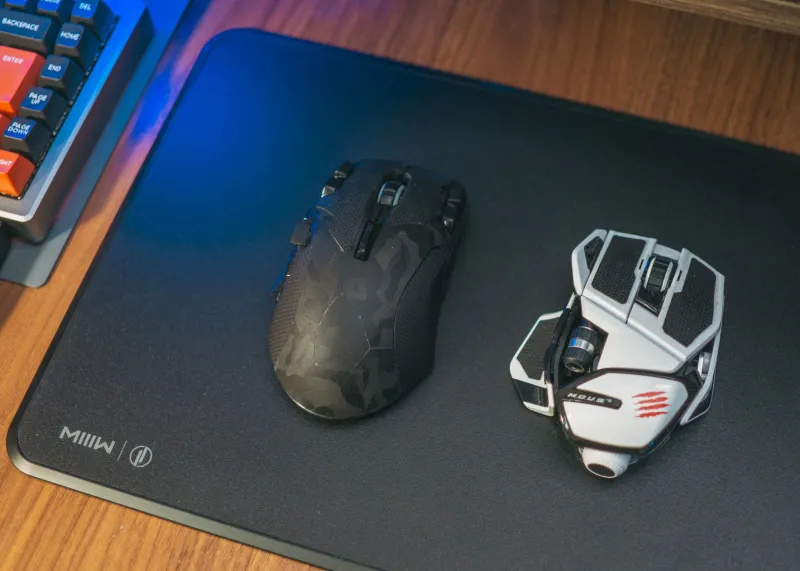
The specification war surrounding polling rates has reached a point where marketing language and engineering reality have diverged significantly. Razer, Logitech, and Pulsar have all released devices advertising 8,000Hz polling—a figure that sounds transformative on a product page. Whether it performs transformatively in practice depends almost entirely on the context in which the device is being used, and serious buyers deserve a more rigorous framework for evaluating these claims than manufacturer benchmarks provide.
What Polling Rate Actually Measures
At its most fundamental level, polling rate describes how frequently an input device reports its position or state to the host system. A mouse operating at 125Hz sends a positional update every 8 milliseconds. At 1,000Hz—the long-standing professional standard—that interval compresses to 1 millisecond. At 8,000Hz, the reporting interval drops to 0.125 milliseconds, or 125 microseconds.
The practical implication is straightforward: a higher polling rate means the operating system receives more granular positional data per unit of time. When a cursor is moving rapidly across a screen, a lower polling rate can introduce interpolation artifacts—the system estimates cursor position between reported data points rather than receiving actual sensor readings. At competitive gaming speeds, where a player might traverse the full width of a mousepad in under 200 milliseconds, those interpolated gaps become meaningful.
What polling rate does not measure is sensor accuracy, lift-off distance, click latency, or any of the other variables that collectively determine how a device feels in use. It is one specification among many, and evaluating it in isolation produces incomplete conclusions.
The 1kHz Baseline and Why It Held for So Long
For the better part of two decades, 1,000Hz represented the ceiling for consumer pointing devices, and for most applications it remained genuinely sufficient. USB's original polling architecture placed practical constraints on how frequently devices could communicate with a host system, and the 1ms interval aligned reasonably well with the refresh rates of monitors available to most users.
At 60Hz display refresh rates, a 1ms polling interval generates approximately 16 positional reports per frame—more than adequate for the display to render smooth cursor movement. Even at 144Hz, the ratio remains favorable. The argument for pushing beyond 1kHz became substantially more credible only as 240Hz and 360Hz displays entered the enthusiast market, reducing the per-frame window to a point where 1ms polling began representing a larger percentage of total frame time.
Where 4kHz and 8kHz Produce Measurable Differences
Controlled testing by independent researchers—most notably studies conducted using high-speed cameras and frame-by-frame latency analysis—has confirmed that polling rate increases do produce quantifiable reductions in what is commonly called "input lag" at the system level. The question is whether those reductions are perceptible and whether they translate into performance outcomes.
For competitive first-person shooter players operating at 240Hz or higher refresh rates, the data supports a genuine argument for elevated polling rates. At these display speeds, the gap between a 1ms and a 0.125ms reporting interval represents a non-trivial fraction of the available frame window. Professional esports players—particularly those competing in titles like Valorant or Counter-Strike 2 where sub-pixel targeting accuracy is decisive—have reported subjective improvement, and some performance metrics in controlled environments have corroborated those reports.
Drawing tablet users present a different but equally compelling case. Devices like those from Wacom and XP-Pen have historically operated at polling rates between 133Hz and 200Hz for pen input, and the transition to higher-rate tablets has produced measurable reductions in stroke lag—the visible delay between physical pen movement and on-screen line rendering. For professional illustrators and animators working at high zoom levels, this difference is not subtle.
The Diminishing Returns Curve
The transition from 125Hz to 1,000Hz produces dramatic, universally perceptible improvements. The transition from 1,000Hz to 4,000Hz produces real but context-dependent gains. The transition from 4,000Hz to 8,000Hz is where the engineering argument becomes genuinely contested.
At 8kHz, the reporting interval is 125 microseconds. Human motor response times operate in the range of 150 to 300 milliseconds. The gap between what the hardware is measuring and what the human nervous system can generate or perceive is enormous. The practical benefit of 8kHz over 4kHz manifests primarily in how smoothly the operating system can reconstruct cursor trajectories—which matters for rendering accuracy in creative applications and, marginally, for the precision of fast flick movements in competitive gaming.
There is also a computational cost to consider. Devices operating at 8kHz generate substantially more USB traffic, and some systems—particularly those with older USB controllers or heavily loaded CPU cores—have exhibited increased CPU overhead when handling high-frequency polling devices. Razer's implementation required a dedicated software workaround to mitigate this on certain chipsets. Buyers running older platforms should verify compatibility before treating 8kHz as an automatic upgrade.
Evaluating Polling Rate in Context: A Practical Framework
Rather than treating polling rate as a standalone specification, serious buyers should evaluate it against three variables: display refresh rate, application type, and existing system capability.
Display refresh rate sets the ceiling for meaningful polling rate investment. If your monitor operates at 60Hz or 144Hz, the incremental benefit of anything beyond 1,000Hz is negligible for cursor-based tasks. At 240Hz and above, 4,000Hz becomes defensible. At 360Hz, 8,000Hz enters the realm of genuine engineering relevance.
Application type determines whether positional granularity translates into outcome differences. Competitive gaming at high refresh rates and professional digital illustration both present legitimate use cases for elevated polling. Productivity software, web browsing, and casual gaming do not.
System capability governs whether the hardware can actually service high polling rates without introducing new performance variables. A machine with a modern USB controller, adequate CPU headroom, and a compatible operating system configuration will handle 8kHz without issue. Systems that do not meet these criteria may experience instability or latency increases that negate the polling rate benefit entirely.
Devices Worth Examining at Each Tier
At the 1,000Hz tier, options remain extensive and the performance ceiling for most users is not meaningfully lower than premium alternatives. The Logitech G Pro X Superlight 2 and the Endgame Gear XM2we both deliver exceptional sensor performance at this rate and represent strong value for buyers whose display and application context does not justify higher polling investment.
At 4,000Hz, the Pulsar X2H and Razer DeathAdder V3 HyperSpeed offer verified performance gains for 240Hz display users without the system overhead associated with 8kHz operation.
At 8,000Hz, the Razer Viper V3 HyperSpeed and Logitech G Pro X Superlight 2 DEX represent the current engineering frontier. Both devices justify their premium primarily for buyers competing at the highest levels of esports or working in professional creative applications on high-refresh displays.
The Verdict
Polling rate upgrades beyond 1,000Hz are not marketing fabrications—the engineering basis for their benefit is real and measurable under appropriate conditions. However, those conditions are specific enough that a majority of buyers will find no perceptible difference between a well-implemented 1kHz device and an 8kHz alternative. The specification is meaningful; the context in which it becomes meaningful is narrower than manufacturers typically communicate. Evaluate polling rate as one variable within a complete system specification, and allocate budget accordingly.